
TUA-BANG KO-CHAN
The Kochan Boat, also known as the Duck-tail Boat, is a traditional wooden fishing vessel constructed entirely from timber. The joints between the wooden planks are sealed with natural tree resin (pitch), a time-honored boatbuilding technique that ensures the hull remains watertight. Compact in size, each boat can accommodate up to eight passengers.
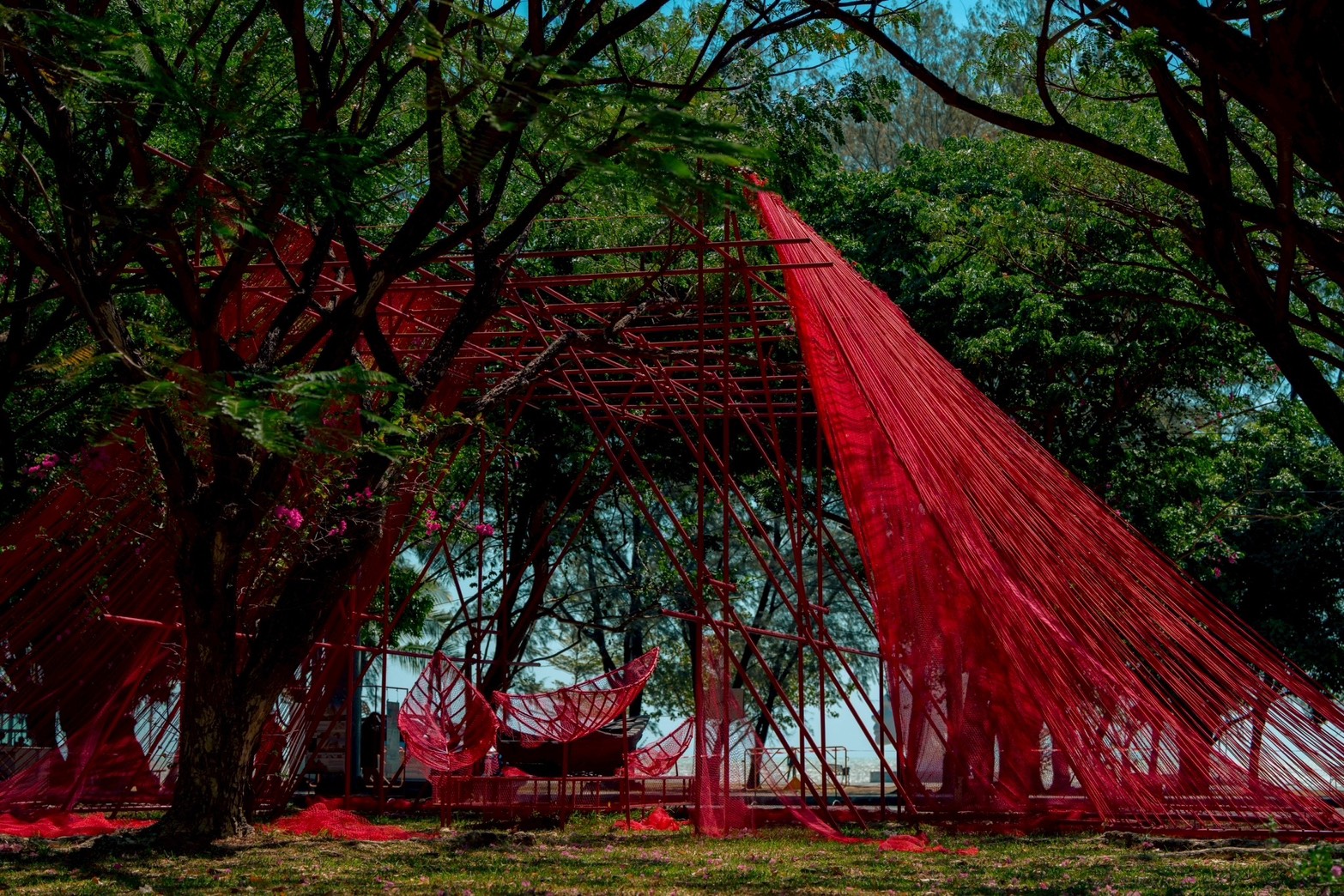
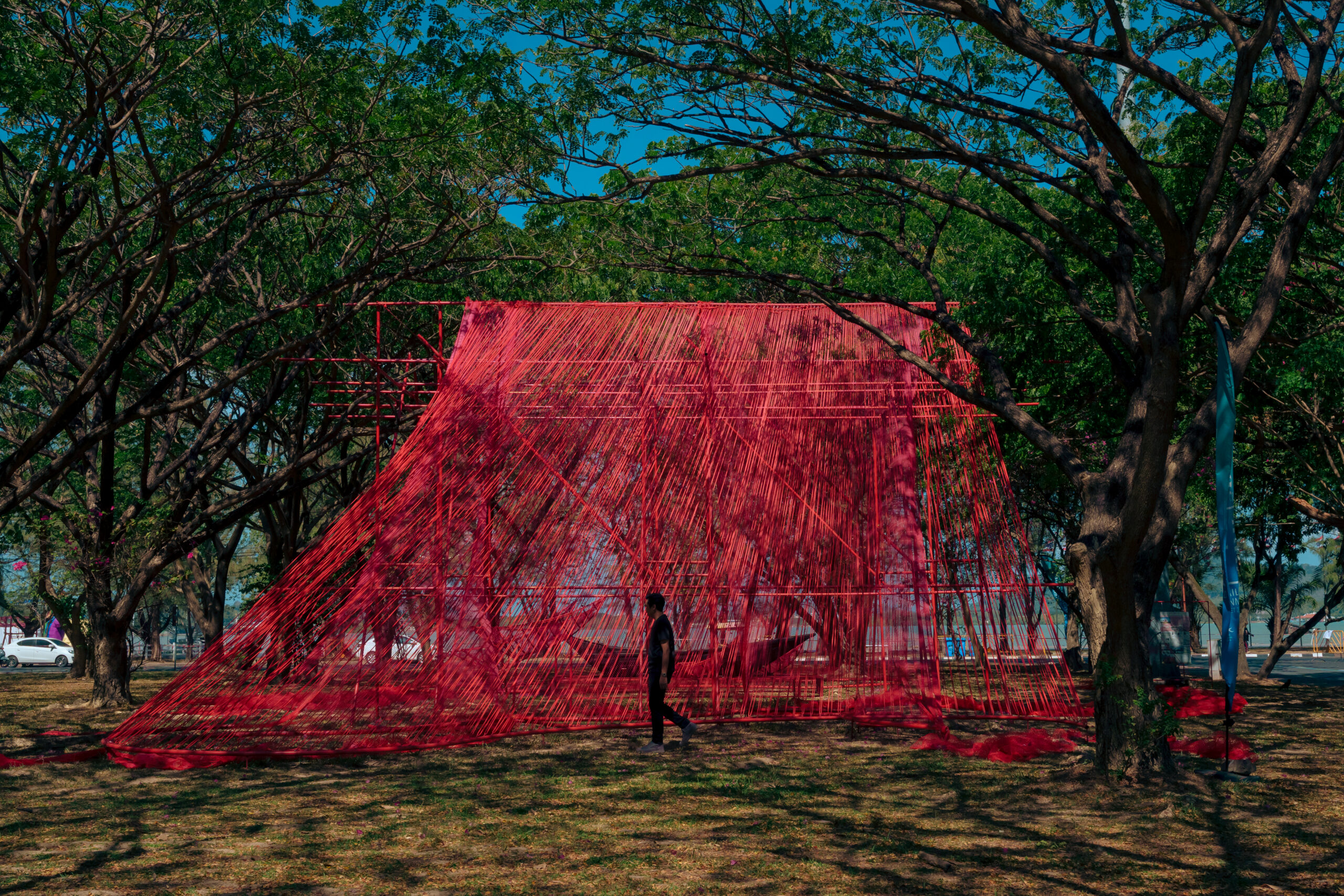
Tua-Bang Ko-Chan Pavilion is an architectural installation that weaves together architecture, artistry, and urban design to narrate the timeless identity of Phuket’s communities—told through the heritage of the Kochan boat culture. In the old Phuket dialect, “Tuabang” means fishing net, while “Kochan” refers to a traditional duck-tail wooden boat used for coastal net fishing. This fishing practice was inherited from Hokkien Chinese communities in Penang and Singapore. Interestingly, the term Kochan itself also originates from the Hokkien language, sharing the same meaning: fishing net.
The Tua-Bang Ko-Chan project began when ATTA STUDIO, a Phuket-based architectural practice, was invited by the Thai Health Promotion Foundation (สสส.) and the Healthy Space Forum to co-create a community workshop with local residents and the Phuket City Municipality. The goal was to reimagine and revitalize the public spaces along Bang Yai Canal a community zone with a vision to promote healthier lifestyles while enhancing local tourism. Bang Yai Canal has long been a vital lifeline of Phuket’s Old Town shaping its cultural landscape, settlement patterns, and daily life from past to present. Historically, the canal served as a principal transportation route, facilitating travel between towns and acting as a major trade pathway for Chinese junks. It was, quite literally, the artery that sustained Phuket’s early communities.